by Cathy Malchiodi
There are several excellent trauma informed assessments that evaluate multiple dimensions, including physical and medical status, cognition, psychosocial issues, and the impact of trauma itself. However, how do we capture additional information that may be missed through standardized, paper and pencil assessments or parental, caretaker, or professional observations? Trauma informed assessment also includes evaluation of the sensory experiences of children—in other words, how the mind and body respond to traumatic events and the flight, fight, or freeze responses of the individual. It also includes the recognition that these responses are adaptive coping strategies rather than pathological reactions.
I also believe that trauma informed assessment includes an evaluation of how traumatic events may have impacted neurodevelopment. Neurodevelopment is a term used to describe how the brain develops over the first 20 years or so of the lifespan, from infancy through adolescence into young adulthood. Bruce Perry (2006) and others have presented comprehensive theories about what neurodevelopment and specifically, neurosequential development entail.
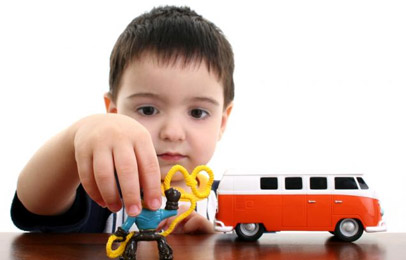
In order to fully understand and evaluate sensory responses in young clients, sensory-based methods of assessment are necessary. These can include many types of action-oriented activities, but the most widely applied involve art and play-based protocols, many of which are found in the fields of art therapy and play therapy. Why art and play? Because for children and adolescents who may not be comfortable with standardized, more cognitively-based assessments, they have an opportunity to use materials, media, toys, and props to give us a series of snapshots about their experiences, trauma reactions, and worldview. Because there are identifiable developmental sequences for play and art expression over the first decade of life, applying this knowledge to child clients provides another way to use the senses to engage individuals in treatment. And, as most of you already know, art and play are child-appropriate forms of communication that allow for a wide-range of expression and for many, a way to tell us about their terrors when words are not available.
Finally, in using sensory means to conduct assessments (especially in a trauma informed, culturally sensitive way), isn’t it nice that many children will find a degree of self-soothing in using toys, paint, or props to communicate their perceptions, feelings, and experiences to you? This is one of the core principles of trauma informed work—to create a sense of safety through all interactions and to capitalize on positive relational aspects between helping professionals and young clients as much as possible. Look forward to reading more about this topic as Bill Steele and I finish up the book!
Until next time, be well,
Cathy Malchiodi, PhD, LPAT, LPCC
Reference
Perry, B.D. (2006) The Neurosequential Model of Therapeutics: Applying principles of neuroscience to clinical work with traumatized and maltreated children In: Working with Traumatized Youth in Child Welfare (Ed. Nancy Boyd Webb), The Guilford Press, New York, NY, pp. 27‐52.